There are a few ways to wrap your head around watching a seven-and-a-half-hour movie.
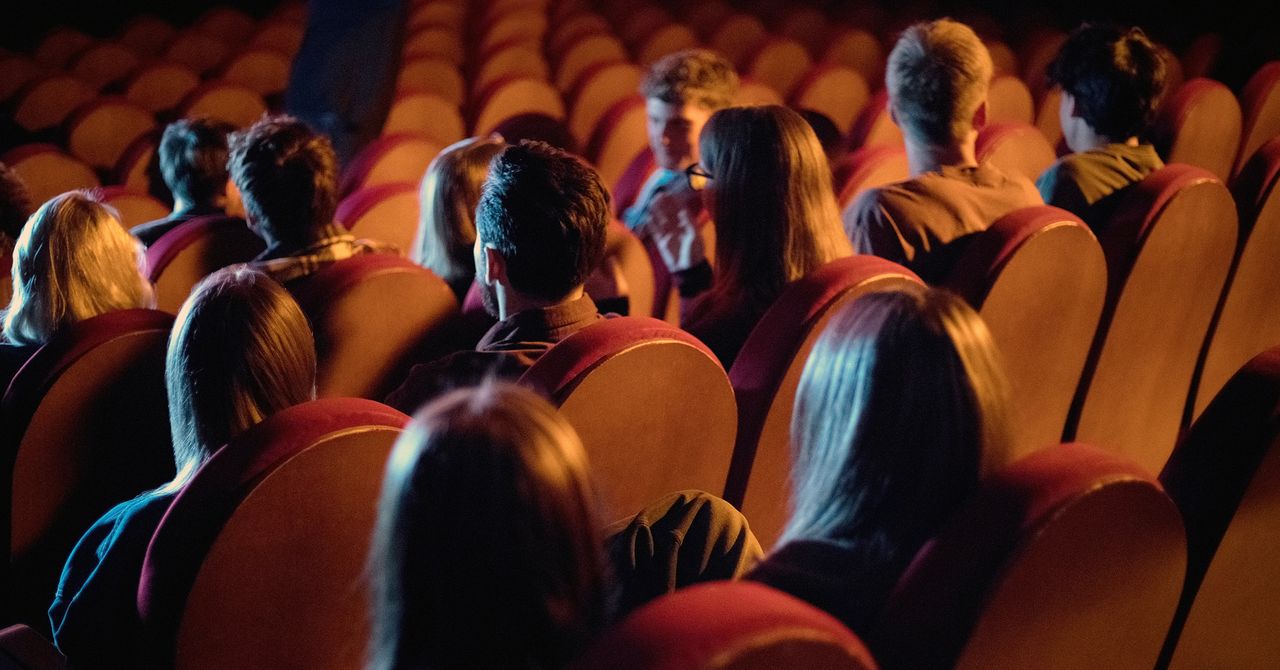
When I was a kid I used to mark time in “Roseannes,” where 30 minutes would equal one Roseanne—the run time of the sitcom. My junior hockey games were two Roseannes. The drive to my uncle’s was 12. A seven-and-a-half-hour movie is 15 Roseannes, or a flight from New York City to Paris in an economy seat with no headrest. It’s a long time to sit and watch a movie, or do anything, these days. But that didn’t stop 250-plus people from doing it on a recent early-spring Saturday in Manhattan.
Sátántango, Hungarian filmmaker Béla Tarr’s 1994 miserabilist epic about a failed Hungarian farming collective, clocks in at 439 minutes. The centerpiece of Film at Lincoln Center’s Farewell to Béla Tarr program this week (the director died in January, age 70), the film is something of a holy rite for hardcore cinephiles. It is rarely screened, and rarely seen.
Sitting still and watching a black-and-white movie for 7.5 hours is the sort of experience that’s in increasingly short supply. Despairing reports warn of the “attention-span crisis.” Parents are suing social media giants—and winning—for stealing their kids’ ability to focus with allegedly addictive short-form video scrolls. Film professors have lamented that, post-pandemic, their students have trouble sitting through even regular-length movies. A whole genre of memes has emerged celebrating the rotting of the brain itself. Netflix, allegedly, mandates that movies and TV shows repeat plot points for the benefit of half-watching viewers.
Sometimes I find myself having a tough time even sitting through an episode of The Real Housewives of Beverly Hills without reaching for my phone so I can look up hockey scores, google “Amanda Frances scams,” or just swipe mindlessly.
“We’ve weakened the muscle of sustained attention,” says Film at Lincoln Center programmer Tyler Wilson. “Here’s an opportunity to be in a room, with the expectations that I’ll stay, and not look at my phone, and not chit-chat. There’s a shared discipline.”
Sátántango is notable not just for its length. Lots of things are long. Superhero blockbusters routinely push three hours. Bingeing the latest streaming TV sensation has become the de facto mode of viewing. Tarr’s film is not just long. It feels long. Across its 439 minutes, there are only 171 shots, with an average shot of about 2.5 minutes, about 60 times the length of the average shot in a Hollywood film.
Sátántango offers an extended experience of duration itself. It’s a key text in a subgenre of art-house movies sometimes termed “slow cinema.” (And it’s not even the longest entry. I once spent a whole day watching Chinese director Wang Bing’s 2018 doc Dead Souls, about the survivors of a Mao-era “reeducation camp,” which runs more than eight hours.) Where modern editing often aims to tighten the pace of time—making it seem faster, or zippier—slow cinema prolongs it.
“Slow cinema is really a cinema that makes you spend time,” says Lexi Turner, who teaches seminars on slow cinema at Marymount Manhattan College. “There’s an aspect of contemplation. And a demand of patience.” Often employing nonprofessional actors and settings unfamiliar to western audiences, Turner says, these share a certain dignity. By spending time watching someone trudge across a field or the sun set slowly across the horizon, these filmmakers are stressing that these experiences and images are worthy of capture and consideration.